
Herringbone Flooring Guide
Herringbone is one of those patterns that seems to belong almost anywhere. It can feel traditional in timber, crisp and graphic in two colours, or unexpectedly playful when the scale and palette are changed.
The pattern itself is simple: repeated rectangular shapes arranged in a broken zigzag. What changes the character is the material, colour, scale and direction you choose around it.
If you’re specifically looking for the vinyl version, explore our herringbone vinyl flooring. Otherwise, read on for a closer look at the pattern, the different ways it can be used and what separates herringbone from similar designs such as chevron.

What is herringbone flooring?
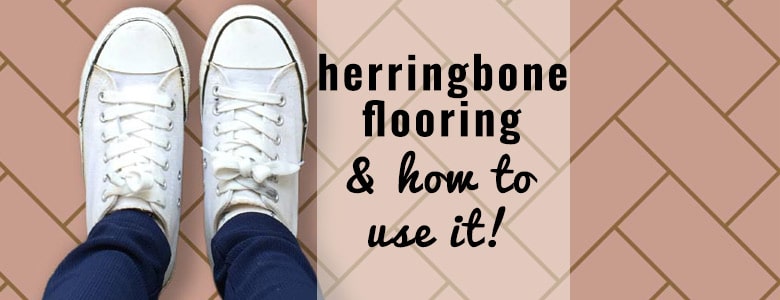
Herringbone describes the pattern rather than one particular flooring material. Rectangular pieces are arranged so the end of one meets the side of the next, creating the familiar broken zigzag.
The name comes from its resemblance to the bones of a fish, but the pattern has a much broader architectural history. Versions of the same arrangement have appeared in brickwork, paving, timber floors and decorative surfaces for centuries.
Today, herringbone can be found in hardwood, engineered wood, laminate, tiles, LVT and sheet vinyl. The material changes; the geometry remains recognisable.
Herringbone or chevron?
Herringbone and chevron are often grouped together, but they are not the same pattern.
Herringbone uses rectangular shapes. The end of one piece meets the side of another, creating a broken zigzag.
Chevron uses pieces that meet at an angle, creating a continuous V-shaped point through the floor.
Both give a floor movement and direction, but herringbone tends to have a slightly more staggered rhythm while chevron feels cleaner and more continuous.
What types of herringbone flooring are there?
Solid and engineered wood
Timber is perhaps the material most closely associated with traditional parquet flooring. Individual blocks or planks create the herringbone arrangement, with the grain and natural variation of the wood becoming part of the finished pattern.
Engineered wood offers another way to get a timber surface, with construction and fitting methods varying by product. With either option, the individual pieces need to be accurately laid to keep the pattern running correctly across the room.
Tiles, laminate and LVT
Herringbone is also available across a range of tile and plank flooring formats. The finished appearance, construction and fitting method depend on the individual product, so it is worth looking beyond the pattern itself when comparing materials.
Herringbone sheet vinyl
Sheet vinyl takes a different approach. Rather than creating the herringbone pattern by laying individual blocks, the complete design runs across the surface of the sheet.
Our own herringbone vinyl flooring is made from 2.6mm cushioned sheet vinyl and supplied as a panel or panels produced to the room dimensions you provide.

How does colour change a herringbone floor?
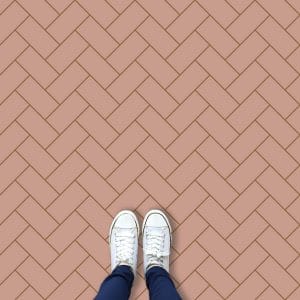
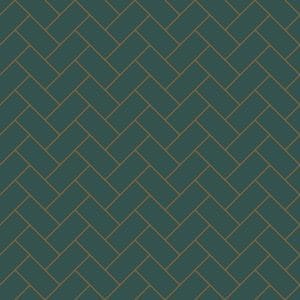
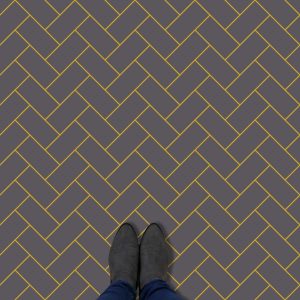
Colour has a huge influence on how herringbone feels. A natural timber palette brings out its parquet roots, while two contrasting colours can turn the same geometry into something much more graphic.
Soft pinks, pale blues and warm neutrals make the pattern feel lighter. Navy, green, black and stronger combinations give the zigzag more definition.
The pattern does not need to imitate timber at all. Once colour changes, herringbone becomes less about reproducing a traditional floor and more about using a familiar geometry in a new way.
Does the scale of a herringbone pattern matter?
Very much so. Smaller blocks create more repeats across the room, which gives the floor more movement and detail. A larger scale gives each shape more room and can make the pattern feel broader and calmer.
There is no single correct scale for a particular room size. The surrounding furniture, cabinetry and how much floor remains visible all affect how the pattern reads.
With our herringbone vinyl flooring, most designs can be adjusted in pattern scale, and your room proof lets you check the layout before production begins.
Which way should herringbone flooring run?
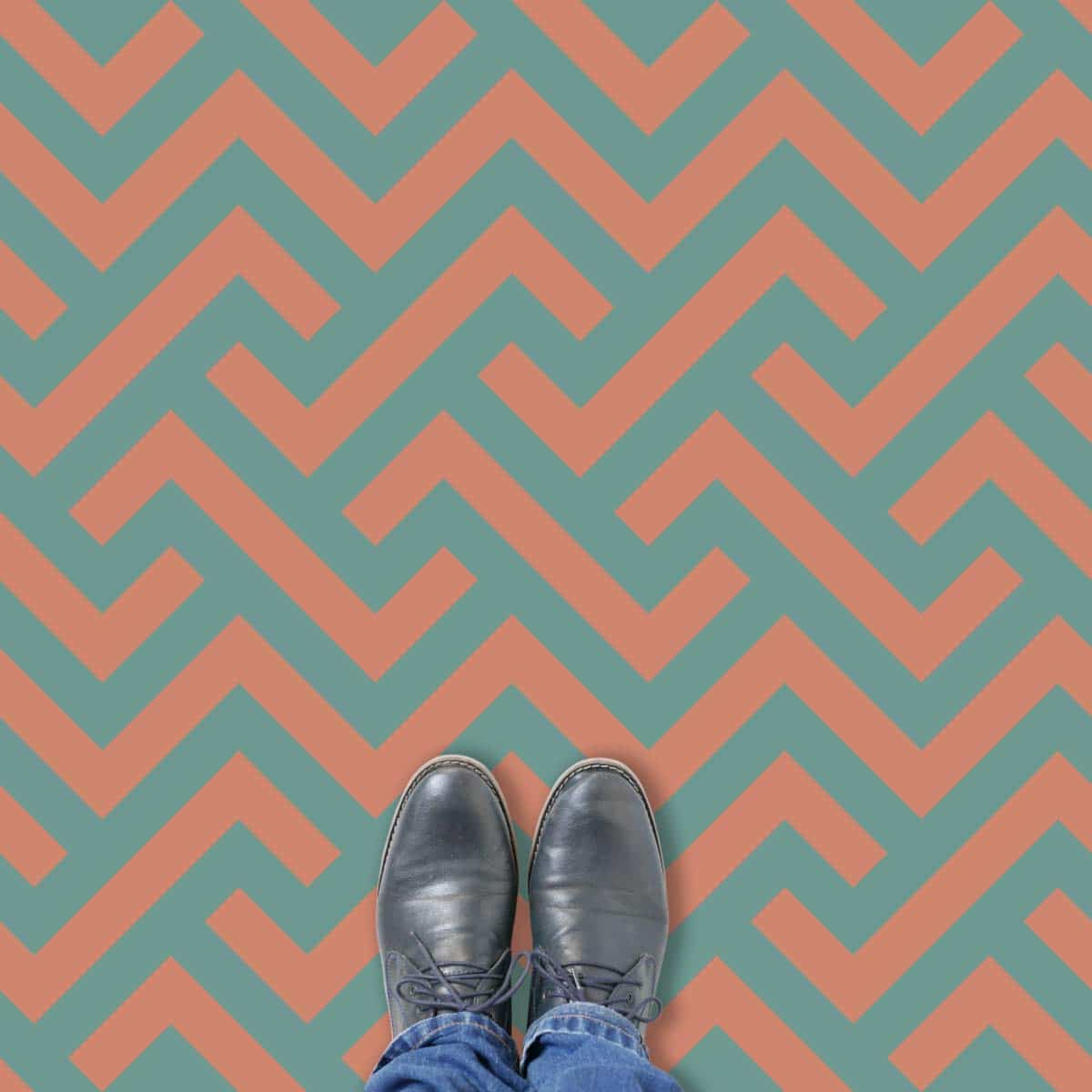
Herringbone is directional, so its orientation can have a noticeable effect on the room. One layout may lead the eye towards a window or doorway; another may run across the room instead.
There is no universal rule that one direction will make every room look larger. The shape of the space, sightlines and pattern scale all matter.
If you’re choosing one of our sheet vinyl designs, tell us if you have a preferred orientation. Where the design allows, we can show the direction in your room proof before the floor is produced.
Herringbone flooring in kitchens
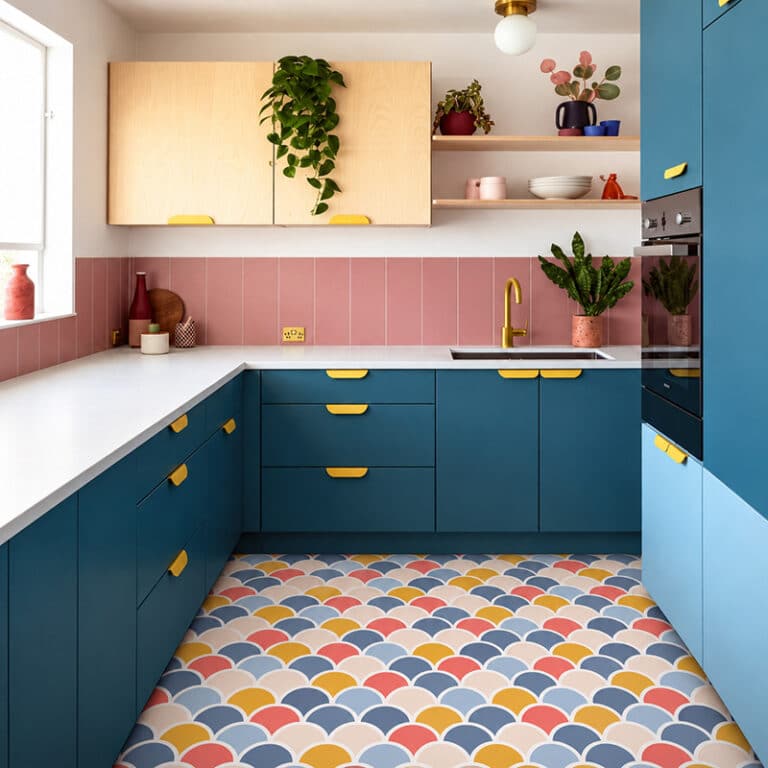
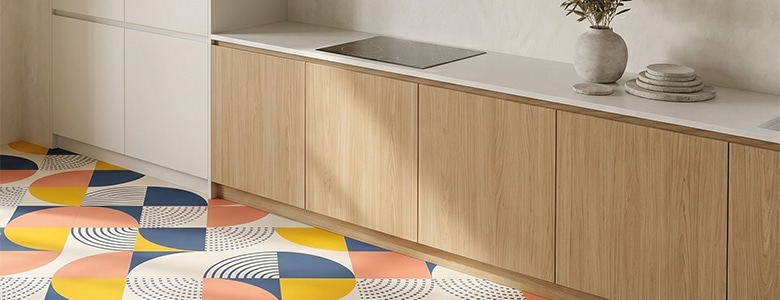
Herringbone works particularly well against the straighter lines of kitchen cabinetry and worktops. The repeating zigzag introduces movement while the units provide a more structured backdrop.
A quieter palette can sit beneath timber or painted cabinets without taking over. Stronger colour can make the floor much more central to the scheme.

For more ideas, see our patterned kitchen vinyl flooring.
Herringbone flooring in bathrooms
A bathroom gives herringbone a very different setting. White sanitaryware and simpler fittings can provide plenty of space for the geometry of the floor to show through.
Small bathrooms and cloakrooms can take a stronger pattern than you might expect, particularly when the rest of the room is kept comparatively simple.
See more ideas in our patterned bathroom vinyl flooring collection.
Herringbone flooring in hallways
Hallways are a natural home for a directional pattern. Herringbone creates movement along the floor and can give an entrance definition as soon as you step through the door.
Because hallways are often relatively narrow, both pattern scale and direction are worth considering before committing to a layout.
Traditional pattern, contemporary colour
One of herringbone’s strengths is that it does not need to choose between traditional and contemporary. The geometry has history, but the colour and scale can completely change the finished result.
That might mean a restrained two-tone floor in a period hallway, a dark green herringbone in a bathroom or something considerably brighter in a modern kitchen.
The pattern provides the structure. Everything around it decides the mood.
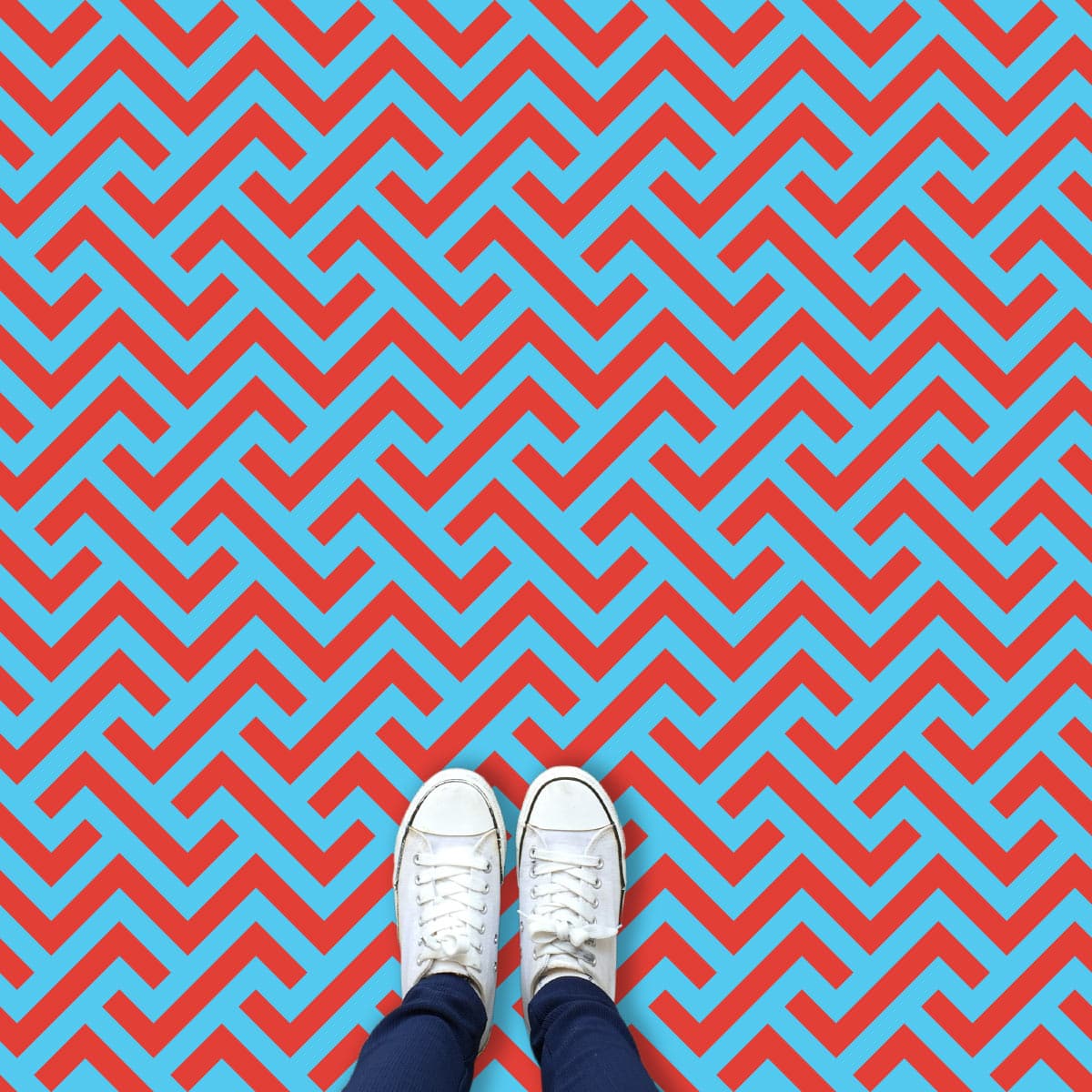
Looking for herringbone vinyl flooring?
Our herringbone designs are produced in 2.6mm cushioned sheet vinyl, made to the room dimensions you provide, with panels available up to 2.9 metres wide.
Choose a design exactly as shown, or, if you’d prefer a change, most designs can be adjusted in colour or pattern scale at no extra cost.
Explore Herringbone Vinyl Flooring →