
A Quick Guide to Industrial Home Decor
Industrial home décor has a particular appeal: exposed brick, weathered wood, metalwork and pieces that look as though they have a story to tell. But you don’t need a converted warehouse or a loft in New York to bring some of that character into your own home.
It’s a look that works through contrasts. Rough against smooth, old beside new, darker materials softened by colour and textiles. How far you take it is entirely up to you.
Start with the materials
Brick, wood and metal are the familiar ingredients of industrial style, but they don’t all need to be present. A timber dining table with dark metal legs might be enough to suggest the look. So might open shelving, a well-worn leather chair or a simple steel-framed light.
It’s often the relationship between materials that makes a room interesting. Smooth walls alongside rough timber, warm upholstery against cool metal, or an older piece of furniture in an otherwise contemporary space.

If your room doesn’t have exposed brickwork or original industrial features, there’s no need to manufacture them all. Choose the details you’re naturally drawn to and let the room develop around those.
Make room for colour
Industrial interiors are often associated with charcoal, brown, grey and black. Those shades can provide a useful foundation, but they don’t have to dictate the whole room.
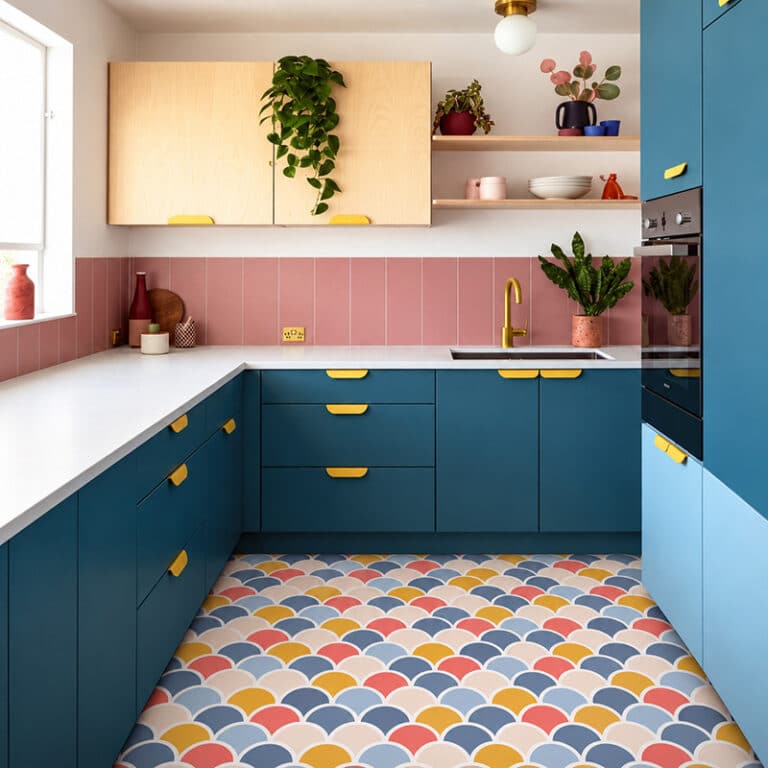
Burnt orange, ochre, deep green or a strong geometric pattern can sit beautifully alongside timber and dark metal. Even a smaller accent of colour can change the feeling of the space.
The question is how much contrast you’d like. A room filled with brick, metal and dark furniture may benefit from a lighter element, while a simpler space could have room for something bolder.
Furniture with a little character
Industrial style lends itself to mixing furniture rather than buying everything from one matching range. Reclaimed cabinets, metal-framed shelving, leather seating and contemporary pieces can all share a room.
Look for shapes and materials that complement each other. A substantial timber table might sit beside lighter chairs. Open metal shelving can bring structure without the visual weight of a solid cupboard.
There is room for softer details too. Cushions, rugs and curtains can make a space feel lived in without losing its industrial character.
Lighting changes the mood
Pendant lights, simple metal shades and adjustable reading lamps are familiar industrial details. They work particularly well when they highlight the textures of brick, timber or other surfaces.

Consider where you actually need the light. A pendant over a dining table, a reading lamp beside a chair or softer lighting in a corner can each make the room more useful as well as adding character.
Let the floor change the feel
Flooring can influence how industrial a room feels, particularly when a large area remains visible around the furniture.
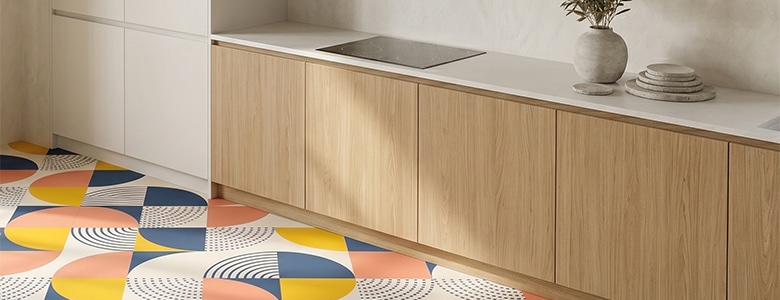
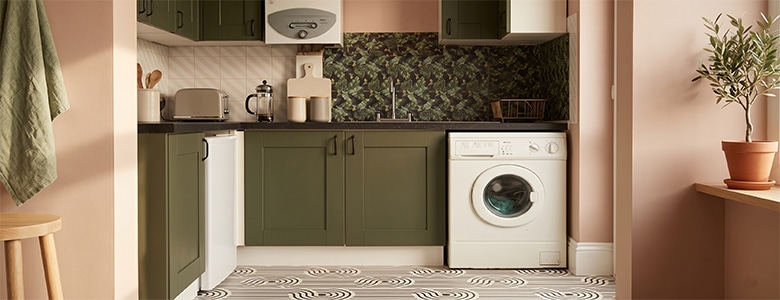
Wood-effect surfaces, concrete-inspired colours and graphic patterns can each take the room in a different direction. A simple floor lets brickwork and furniture lead. Something more striking, such as a black-and-white geometric design, can introduce a contemporary contrast.

Patterned sheet vinyl is also an option if you’d prefer something softer and warmer underfoot than exposed concrete or traditional hard flooring.
If you’re considering a change, have a look through our patterned vinyl flooring collection. You can explore the designs and order samples to see how the colours work alongside the materials already in your room.
Find your own version of industrial style
The most interesting industrial interiors aren’t necessarily the ones with the most exposed brick or the largest collection of vintage furniture.
They often begin with one thing you love: an old cabinet, a favourite chair, an interesting light or a pattern you’ve been thinking about. Build around that, mixing textures, colours and materials until the room feels like yours.