

How to Fit a Glass Splashback
How to Fit a Glass Splashback
Ready to get it on the wall?
You’ve chosen the design, checked the size and your splashback has arrived. Now for the practical bit.
Fitting a glass splashback is fairly straightforward when the wall is prepared properly and you have the right adhesive to hand.
Our splashbacks are made from 6mm toughened glass with polished edges and arrive ready to install. Here’s how to fit yours securely and neatly.
Before you start
A few minutes spent checking the wall now makes the fitting much easier.
The surface should be clean, dry, sound and reasonably flat. Remove any loose or flaky paint and make sure fresh plaster or paint has fully dried before you begin.
Check the worktop and hob are level too, particularly if the splashback is sitting between units, beneath an extractor or inside another fixed space.
Make sure the splashback fits.
Toughened glass cannot be cut or trimmed after manufacture, so place it carefully against the wall and check the size, position and surrounding gaps before fitting.
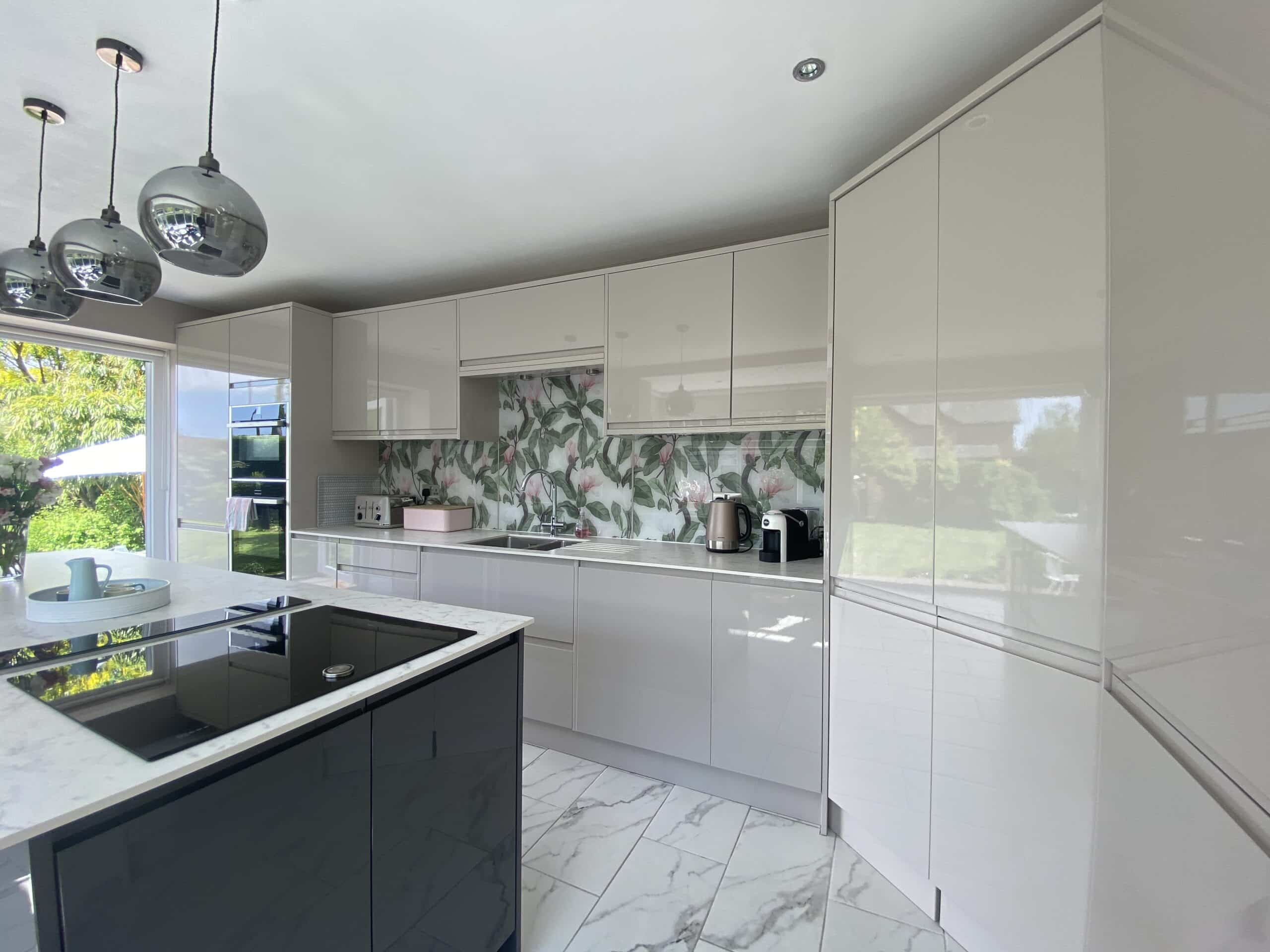
How to fit a glass splashback
Prepare the wall
Clean the area thoroughly and make sure it is dry, secure and reasonably flat.
Remove anything that could stop the splashback sitting properly against the wall, including loose paint, obvious bumps or old adhesive.
If you’re fitting around sockets, cupboards, an extractor or other fixed features, check the panel against the space before moving on.
Apply the adhesive
Lay the splashback face down on a clean, soft surface such as a towel or blanket.
Use a neutral-cure, solvent-free silicone or suitable mirror adhesive.
Apply small, evenly spaced blobs to the reverse of the splashback, keeping the adhesive away from the outer edges so it doesn’t squeeze out when the glass is pressed into place.
Always follow the adhesive manufacturer’s instructions.
Put the splashback in position
Lift the panel carefully into place.
For larger pieces, having another pair of hands makes this much easier.
Once you’re happy with its position, press gently and evenly across the glass so the adhesive makes good contact with the wall.
Don’t force the glass against an uneven surface.
Leave it to cure
Keep the splashback supported and undisturbed while the adhesive cures.
The curing time will depend on the product you’re using, so follow the manufacturer’s instructions rather than rushing the final stage.
Once cured, seal around the relevant edges with neutral-cure silicone for a neat finish and to help prevent moisture getting behind the glass.
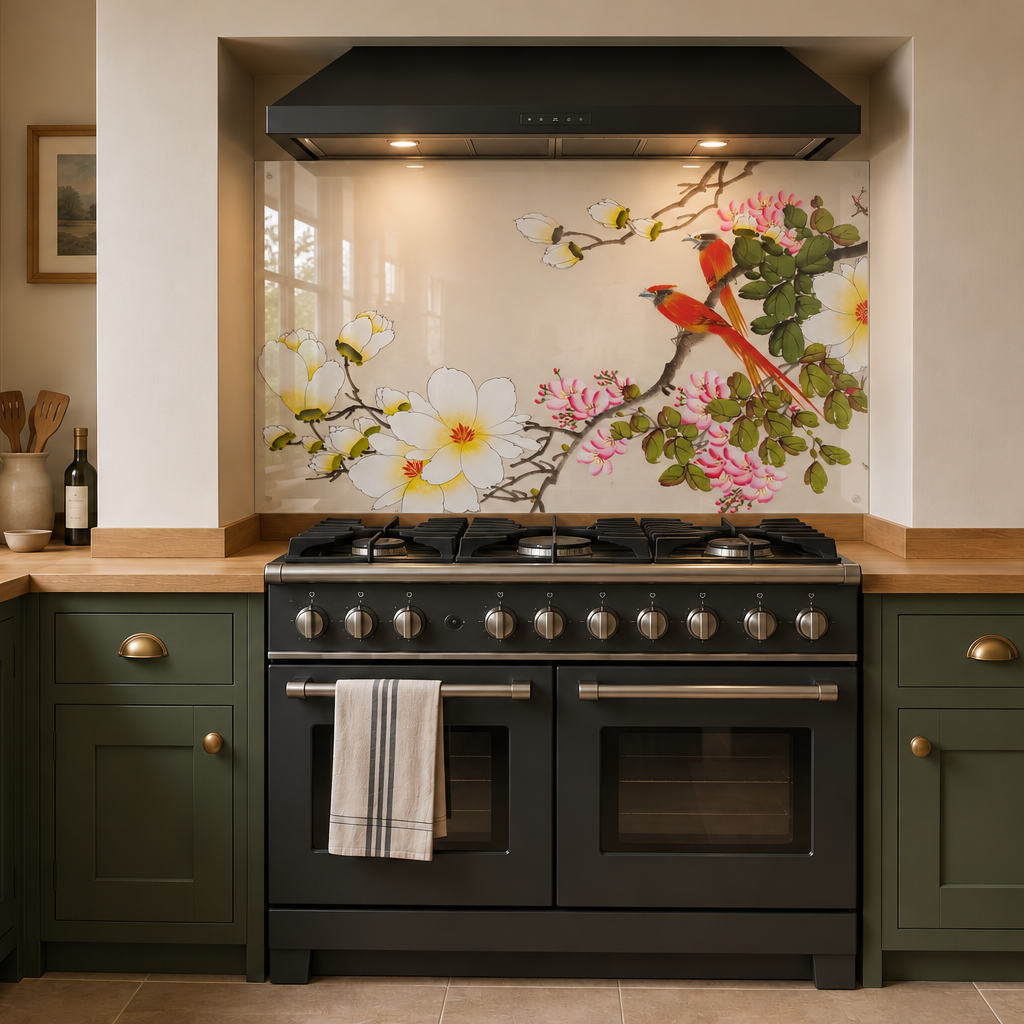
Fitting a glass splashback behind a cooker or hob
If the wall you’re changing is behind the hob, there are a couple of extra things to check.
Our 6mm toughened glass splashbacks are designed for use behind domestic gas and electric hobs and cookers.
The important part is the clearance around your particular appliance.
Cookers and hobs have their own installation requirements, particularly gas appliances, so always follow the minimum distances specified by the appliance manufacturer and your kitchen installer.
Don’t use the splashback to override a required safety clearance.
Once those measurements are confirmed, the fitting process is the same: prepare the wall, check the panel fits, use a suitable neutral-cure adhesive and allow it to cure fully.
Working with sockets, corners or awkward walls?
Not every kitchen gives you a neat rectangle.
If your wall has sockets, switches, unusual edges or needs more than one piece of glass, it is much better to work these out before the splashback is made.
Because toughened glass cannot be cut after production, we can make your splashback around the wall you actually have.
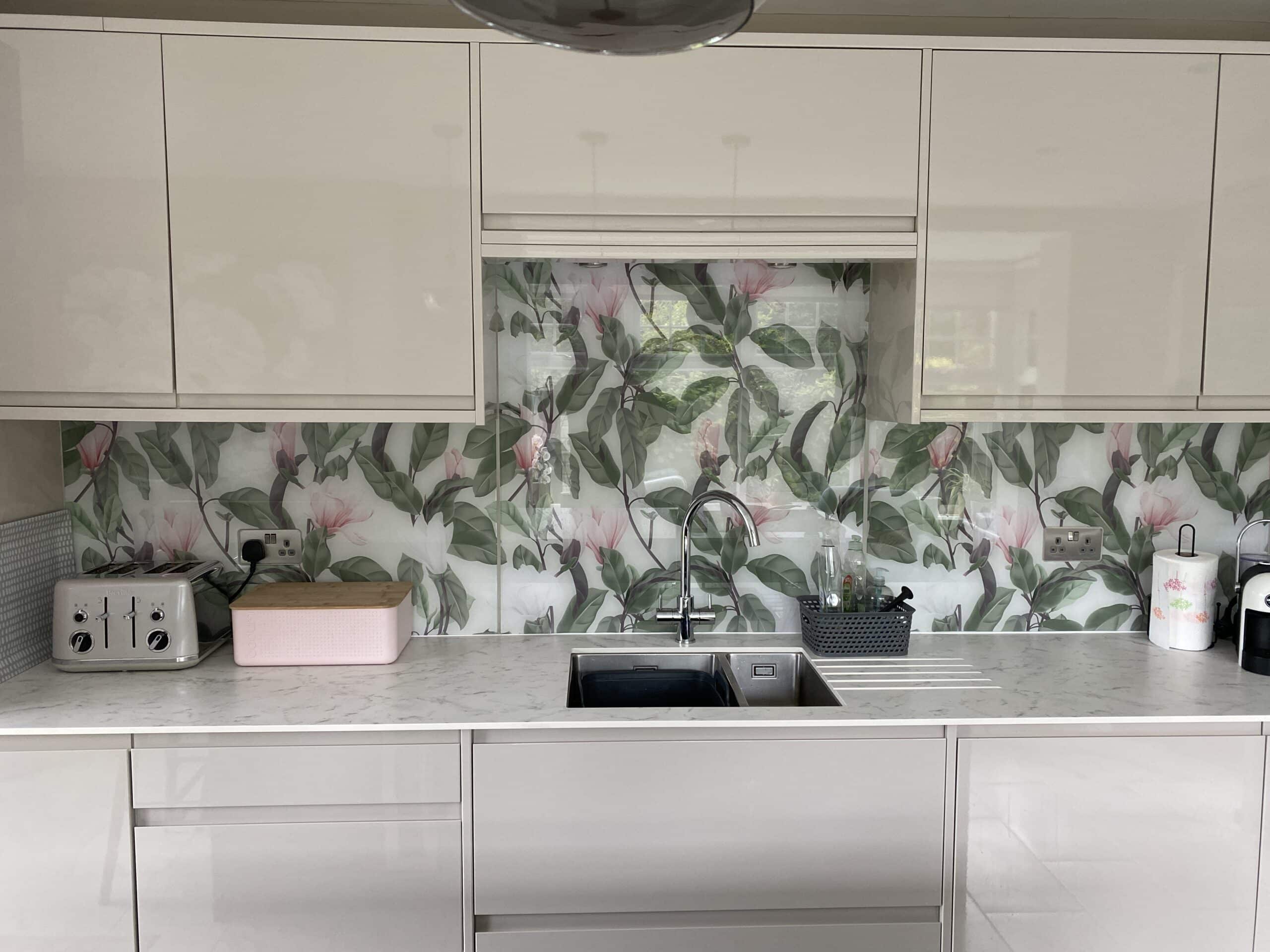
Socket cut-outs
Positioned before the glass is toughened.
Uneven or shaped edges
Useful around cupboards, extractors and awkward corners.
More than one panel
For wider areas or walls where separate pieces make more sense.
Your measurements or sketch
A simple drawing is often enough for us to understand what you’re working around.
Need help with the wall you have?
A few things worth checking before you fit
Is the wall flat?
It doesn’t have to be absolutely perfect, but large bumps, hollows or loose surfaces should be dealt with first.
Is everything dry?
Yes. Fresh plaster, paint and other wall finishes should be fully dry before the splashback is installed.
Have you checked the glass before fitting?
Always inspect the splashback and check its size and position before applying adhesive.
Are you using the right silicone?
Use a neutral-cure, solvent-free silicone or adhesive suitable for mirrors and backed glass. Avoid products that could react with or damage the backing.
Does the glass need a little clearance?
Don’t wedge the glass tightly between fixed surfaces. Your measurements and fitting should allow the small clearances required for installation and sealing.
Once it’s fitted
Glass is one of the easier kitchen surfaces to live with.
For everyday cleaning, warm soapy water or an ordinary household glass cleaner and a soft cloth are usually all you need.
Avoid abrasive pads, scourers and harsh cleaning products.
Grease or cooking splashes are easiest to remove when they haven’t been left sitting for too long, but otherwise there isn’t much ceremony required.
Glass splashback fitting questions, answered
How do you attach a glass splashback to the wall?
A glass splashback is normally bonded to a clean, dry and sound wall using neutral-cure, solvent-free silicone or a suitable mirror adhesive. Apply the adhesive to the reverse of the glass, carefully position the splashback and allow it to cure according to the adhesive manufacturer’s instructions.
What adhesive should I use for a glass splashback?
Use a neutral-cure, solvent-free silicone or adhesive specifically suitable for mirrors or backed glass. Avoid ordinary grab adhesives unless the manufacturer specifically confirms that the product is suitable for your splashback.
Can I fit a glass splashback behind a cooker?
Yes. Our 6mm toughened glass splashbacks are designed for use behind domestic gas and electric hobs and cookers. Always follow the appliance manufacturer’s required clearances, particularly around gas burners and other high-heat appliances.
Can I cut a glass splashback if it doesn’t fit?
No. Toughened glass cannot be cut, drilled or trimmed after it has been manufactured. Any socket cut-outs, shaped edges or other alterations need to be included before the glass is toughened.
Can a glass splashback be fitted over tiles?
It can sometimes be fitted over an existing tiled surface if the tiles are secure, sufficiently flat, clean and suitable for the adhesive being used. The additional thickness also needs to work with sockets, cupboards and surrounding surfaces. If you’re unsure, check with your installer before ordering.
Do I need a professional to fit a glass splashback?
A simple rectangular splashback on a sound, flat wall can be a manageable DIY job. Larger panels, multiple pieces, complicated walls or installations around services may be better handled by an experienced kitchen or glass installer.
How long should I leave the adhesive before using the area?
Follow the curing time given by the adhesive manufacturer. Don’t seal, disturb or put unnecessary pressure on the splashback until the adhesive has cured properly.
Still at the measuring stage?
If the glass isn’t on its way yet, that’s actually the best time to deal with sockets, unusual edges, awkward corners or a wall that isn’t quite straightforward.
Send us the measurements — or a simple sketch if that’s easier — and we’ll help work out how the splashback should be made before you order.